





Reynolds Peak was the last planned climb of my trip to Washington, and by that point I was already running on a pretty questionable mix of stubbornness, caffeine, and momentum. I had just climbed Big Snagtooth the day before, and I had also been on Black Cap and Remmel Mountain within the previous week. Reynolds Peak felt like the final swing before heading home, so after finishing my climb the evening before, I drove straight to the trailhead and called it good enough.
There is a small camping area near the start called Mystery Campground. It is basic but useful. There are tables, campsites, and a bathroom, though no real river access. I slept in the front seat of the car, woke up early, and got moving before I had enough time to think too hard about how tired I already was.
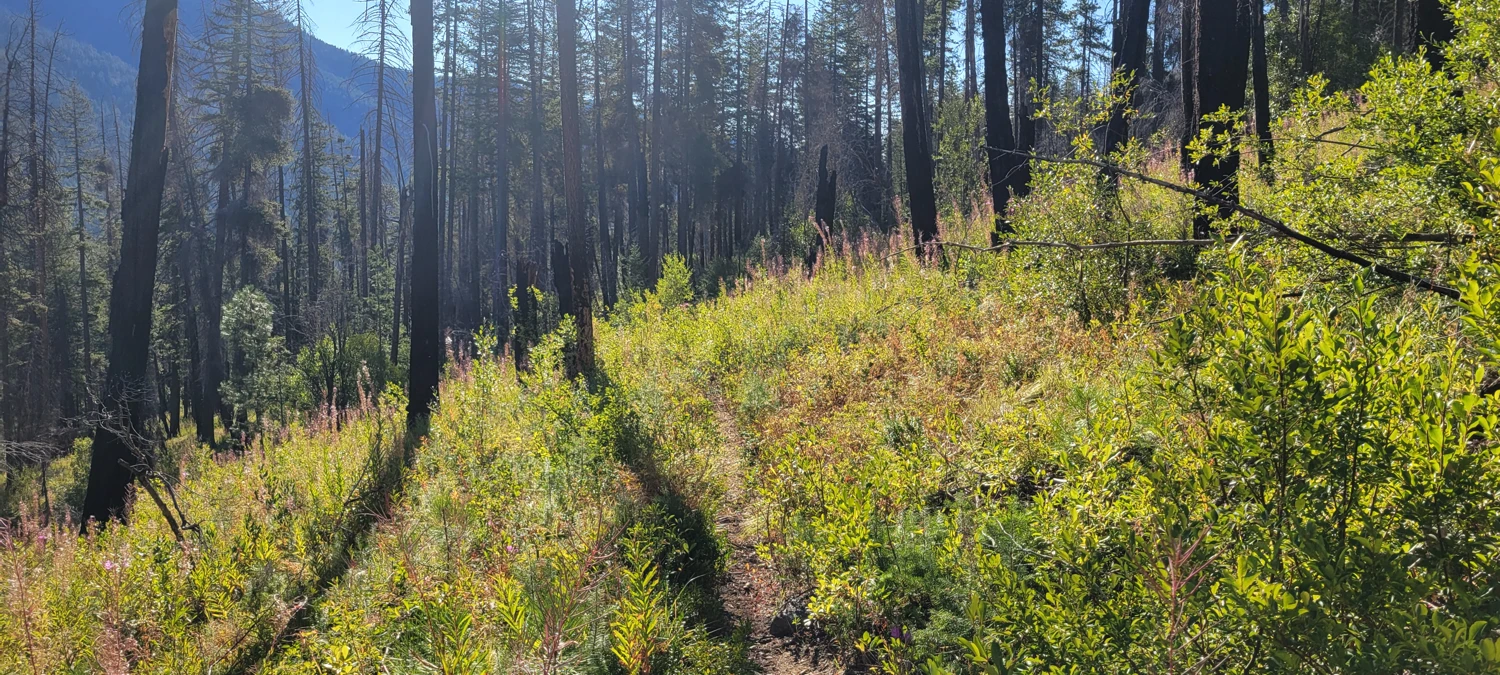
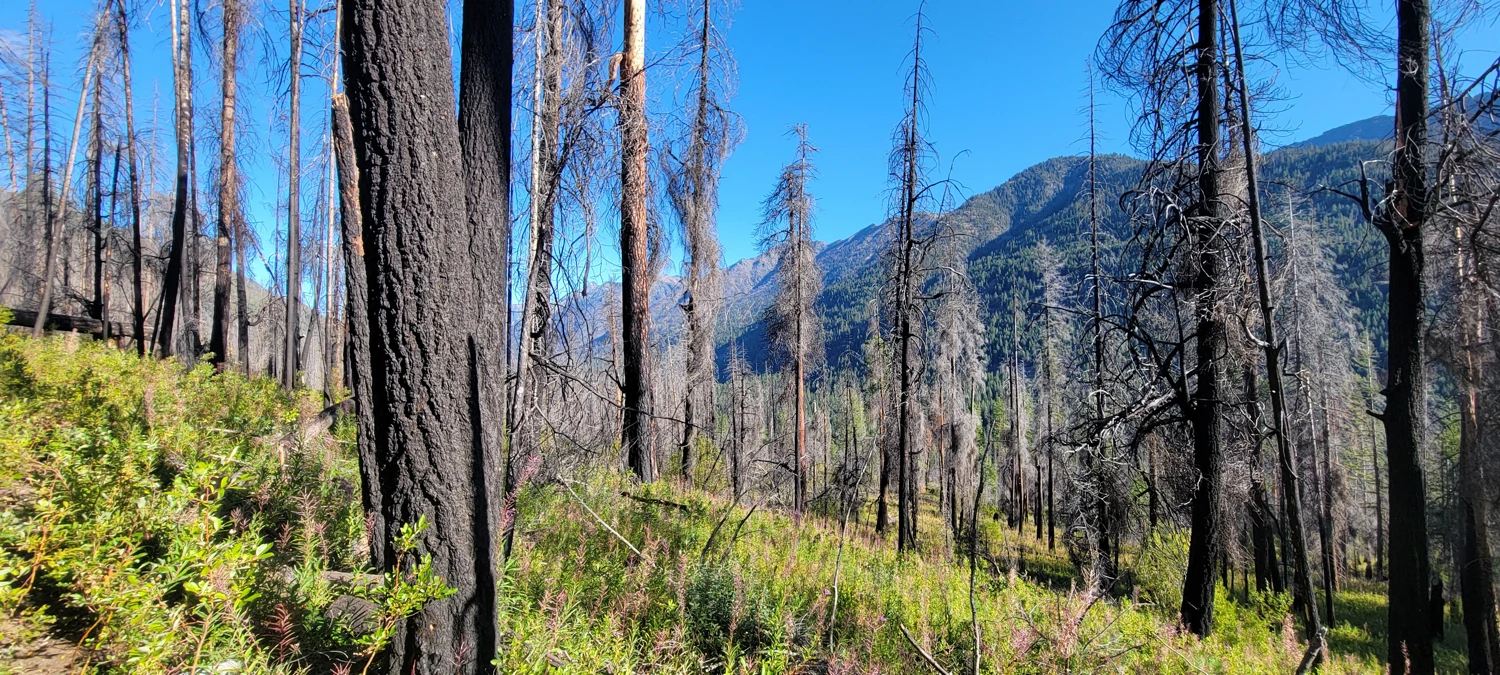
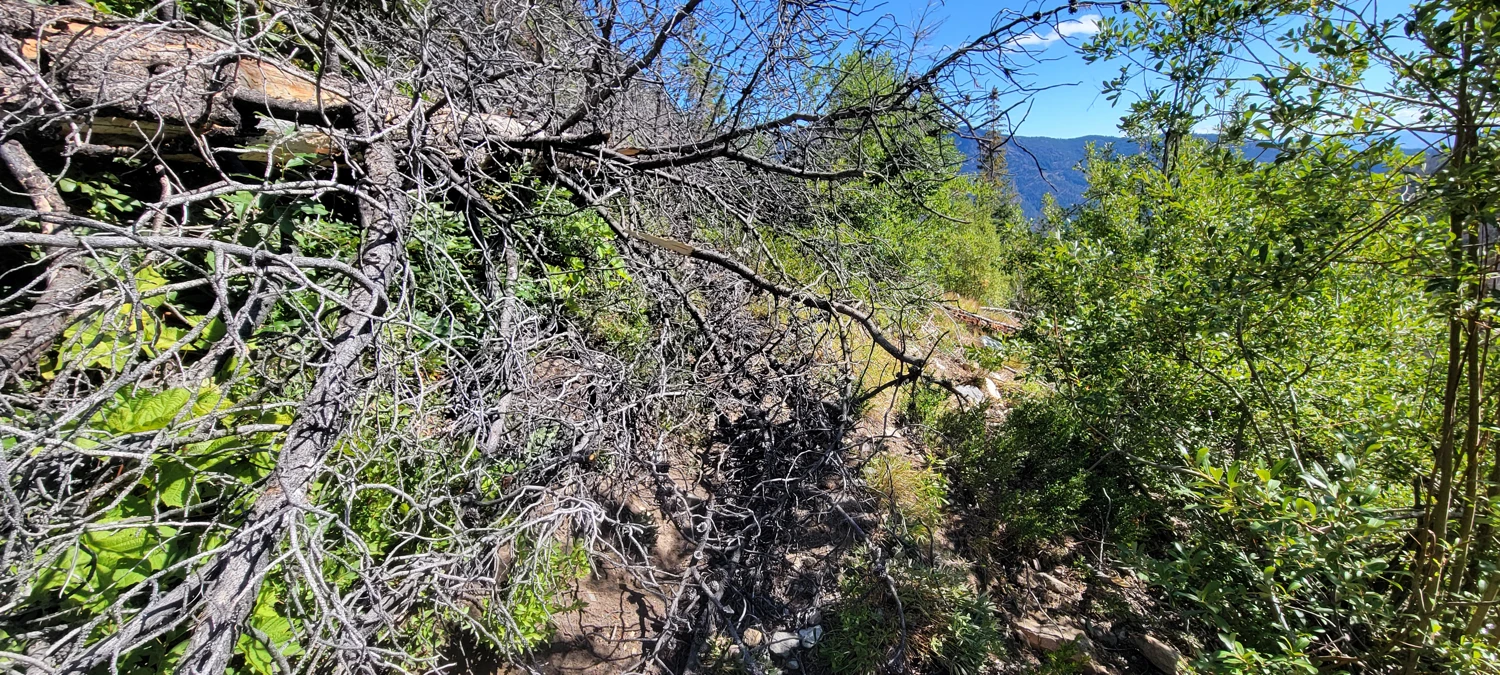
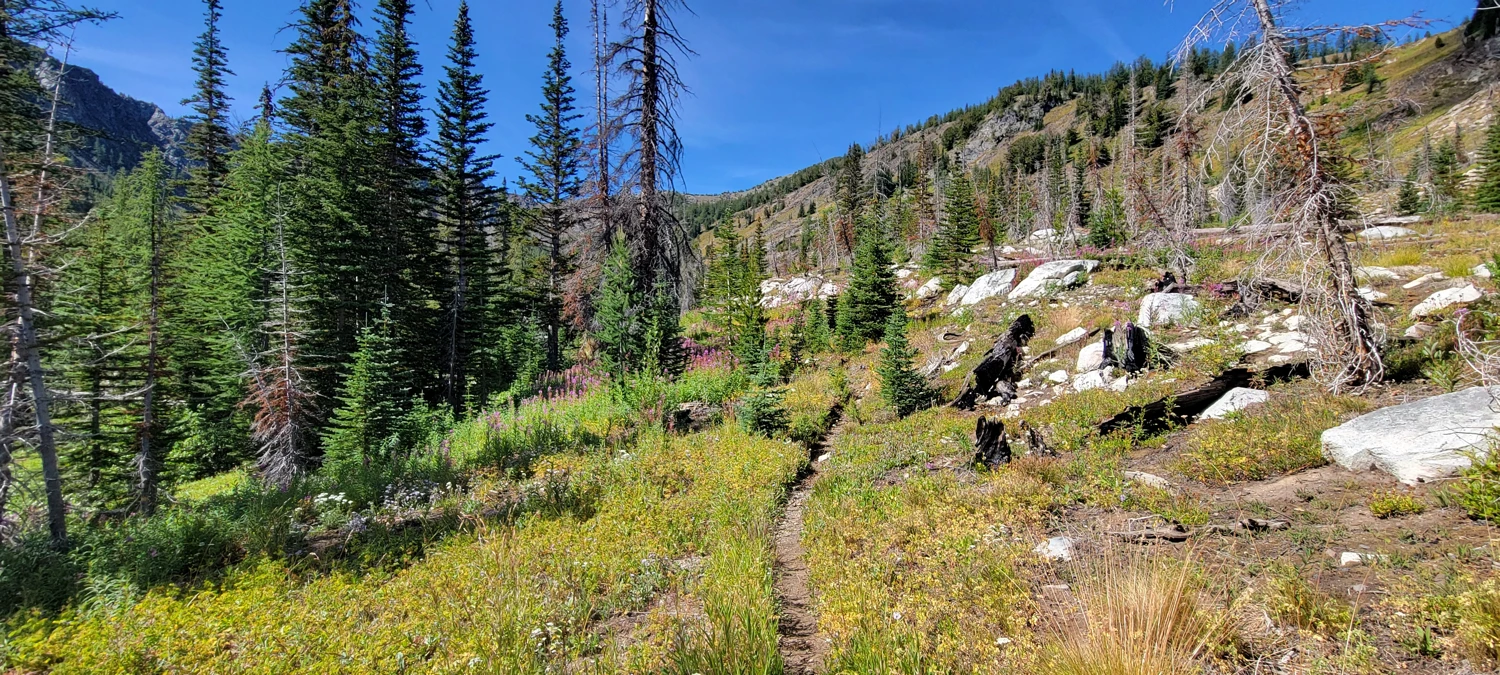
The first section of the Williams Creek Trail climbs steadily through a forest that has clearly burned at some point. Normally that can make for a pretty ugly start, but this one had its own appeal. The understory was full of wildflowers and, somewhat surprisingly, the trail was mostly free of blowdowns. I only remember one major one, and even that was easy enough to squeeze past. For the first couple of miles the trail winds uphill, then eventually swings around the hillside and begins paralleling Williams Creek. From there the grade stays pretty steady all the way up toward Williams Lake.
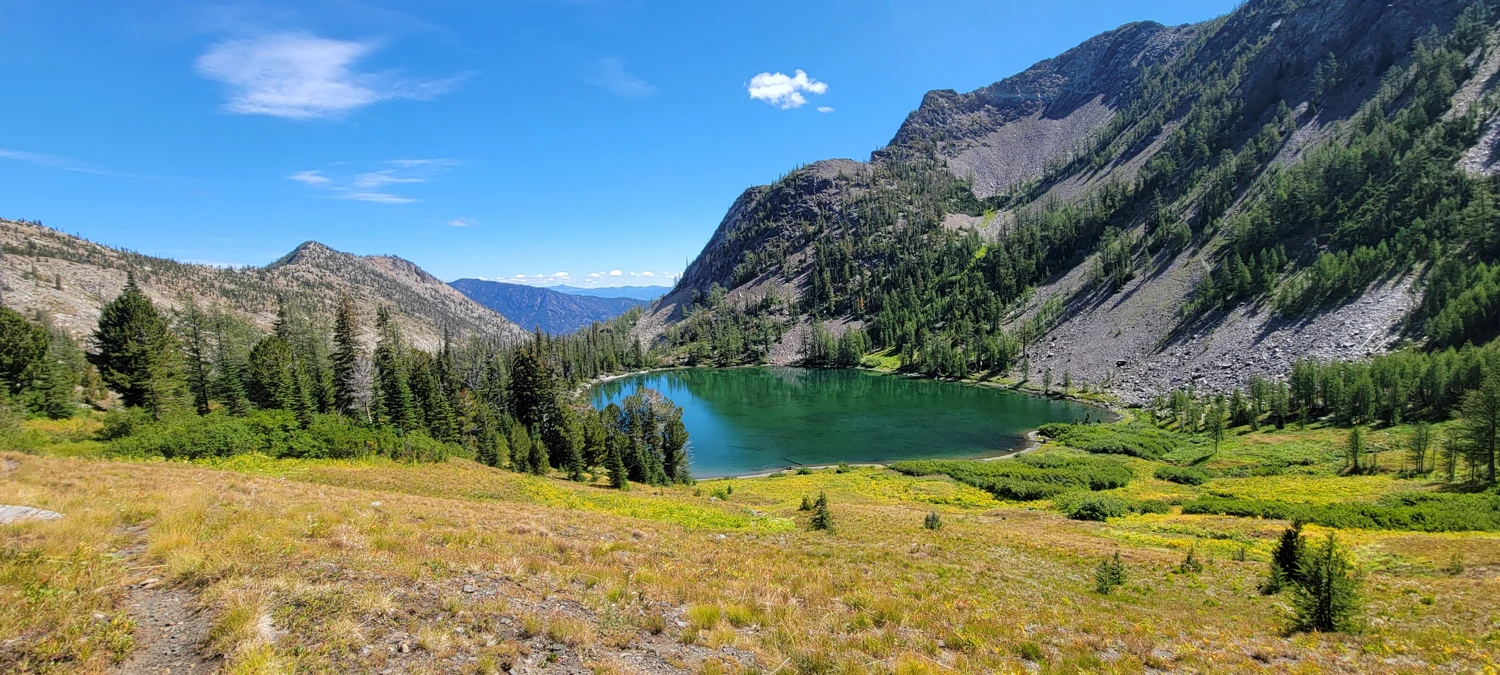
Williams Lake is a good one. The water was nearly crystal clear and the lake sits in a basin boxed in by mountains in a way that makes it feel more remote than it probably is. It also looked like it might have decent camping around it, though I was trying to get Reynolds Peak done in a day and did not spend much time poking around. I topped off my water and got moving again. Late in the season this matters. Be sure to fill up at the lake because I did not find any water after that.
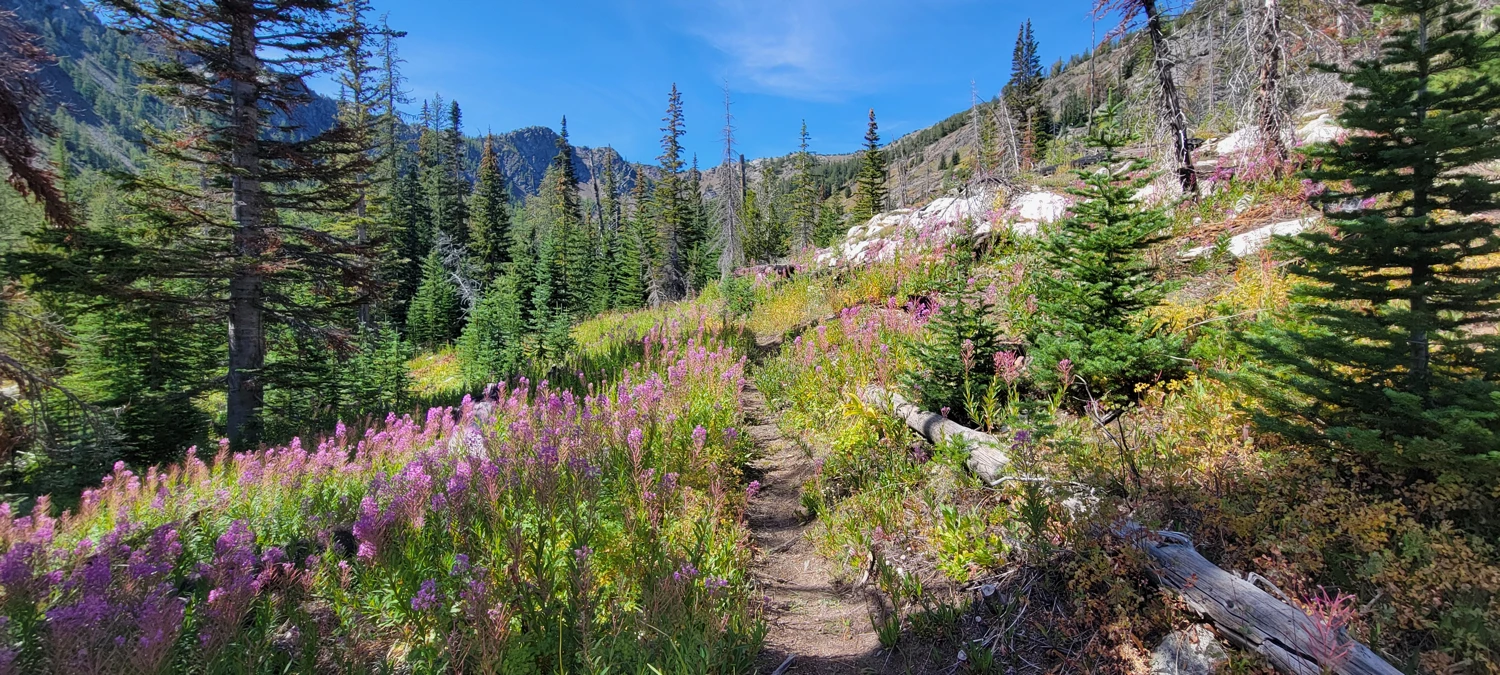
From Williams Lake, the route to Reynolds Peak gets less straightforward. You need to gain the ridge to climber’s right. There is a faint trail that leads up into some tree cover, and on the way in I managed to lose it. That led to a bit of improvising, which honestly just felt normal by that point in the week. I aimed for the obvious low point on the ridge and bashed my way up. On the way out I found the trail without much trouble, so it is there, just easy to miss if you are moving too fast or thinking about something else.
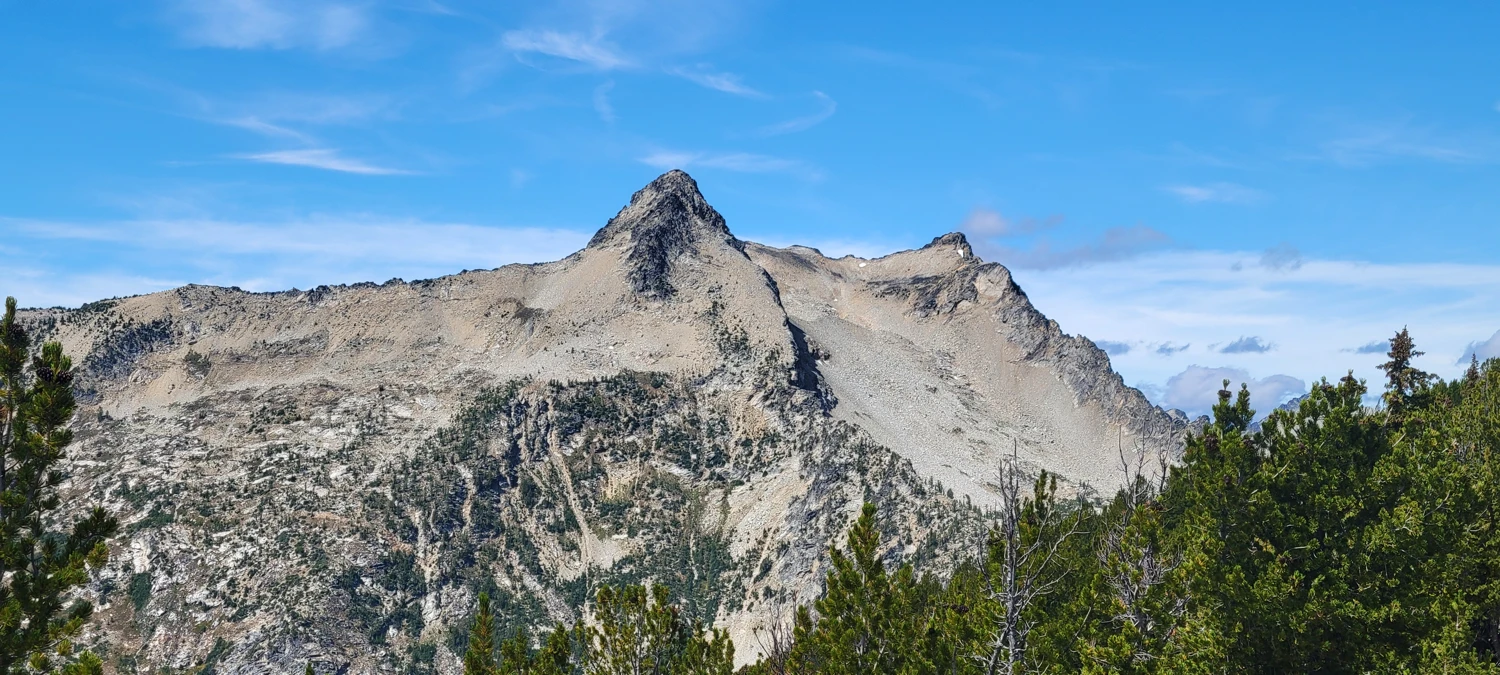
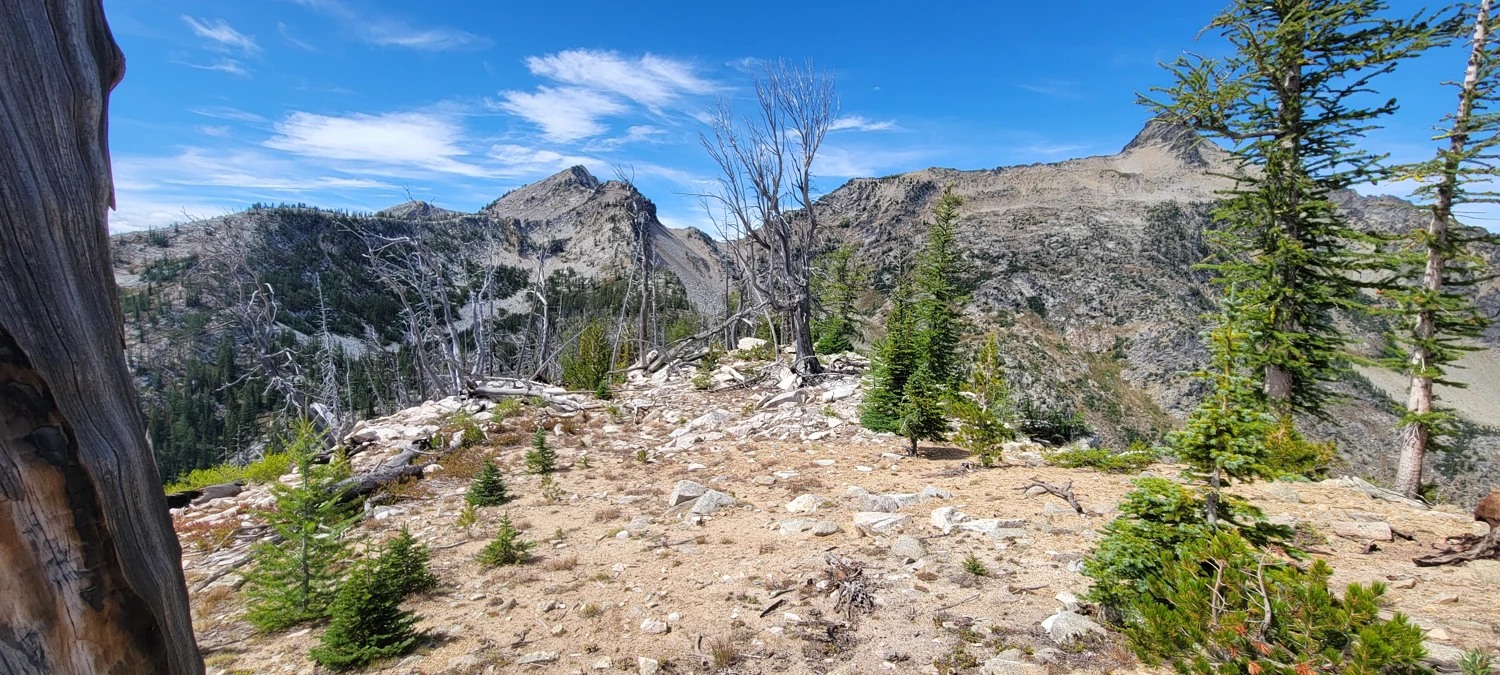
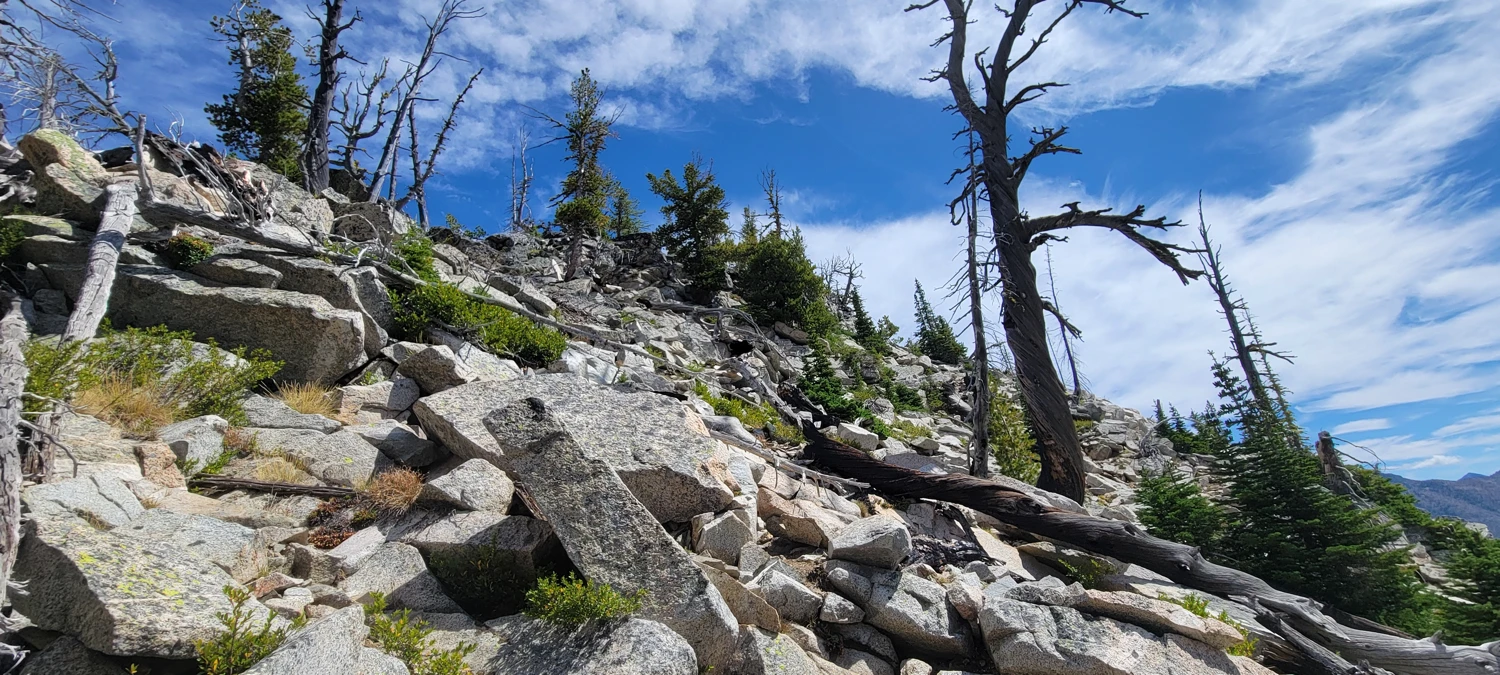
Once on the ridge, the line over toward Reynolds Peak becomes obvious. There is a broad ridge to follow, and at 48.36185, -120.55472 there is a clear spot to drop into the basin below the peak. That basin is where the route starts to feel more like work.
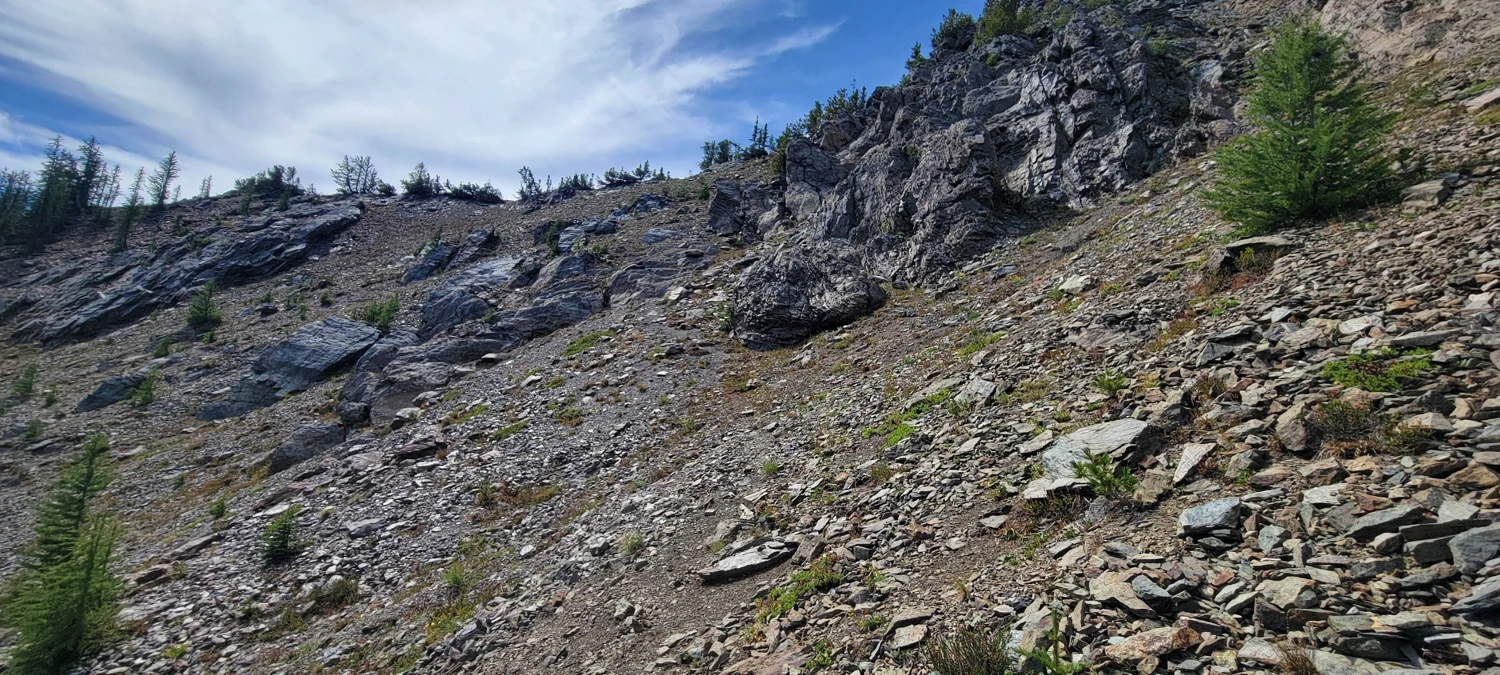
There is a lot of loose rock in there, though most of it is on the larger side and holds well enough if you are paying attention. To get out of the basin, there is an obvious scree slope leading to a small pass. I tried avoiding the worst of the scree by heading into the strip of forest in the middle instead. It was steep, full of veggie belays, and not exactly elegant, but I still preferred it over skating around on loose rubble.
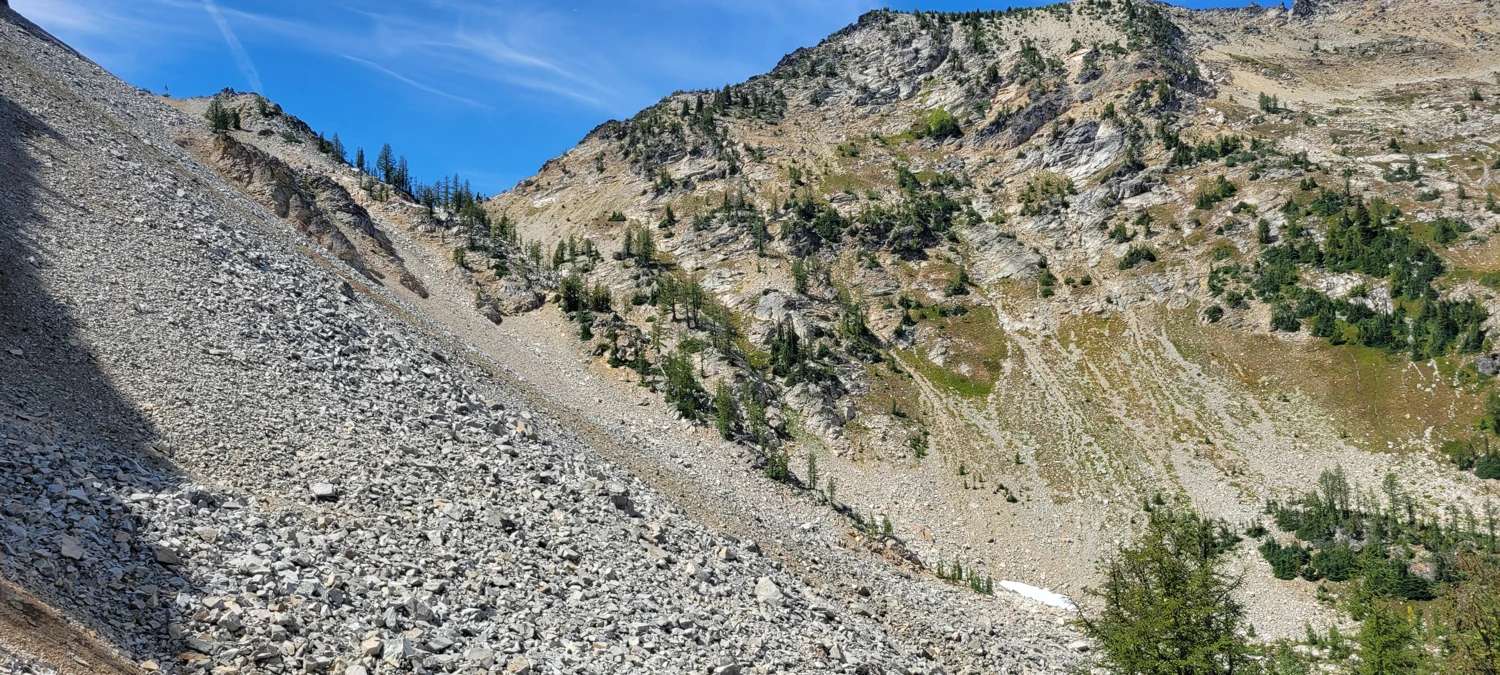
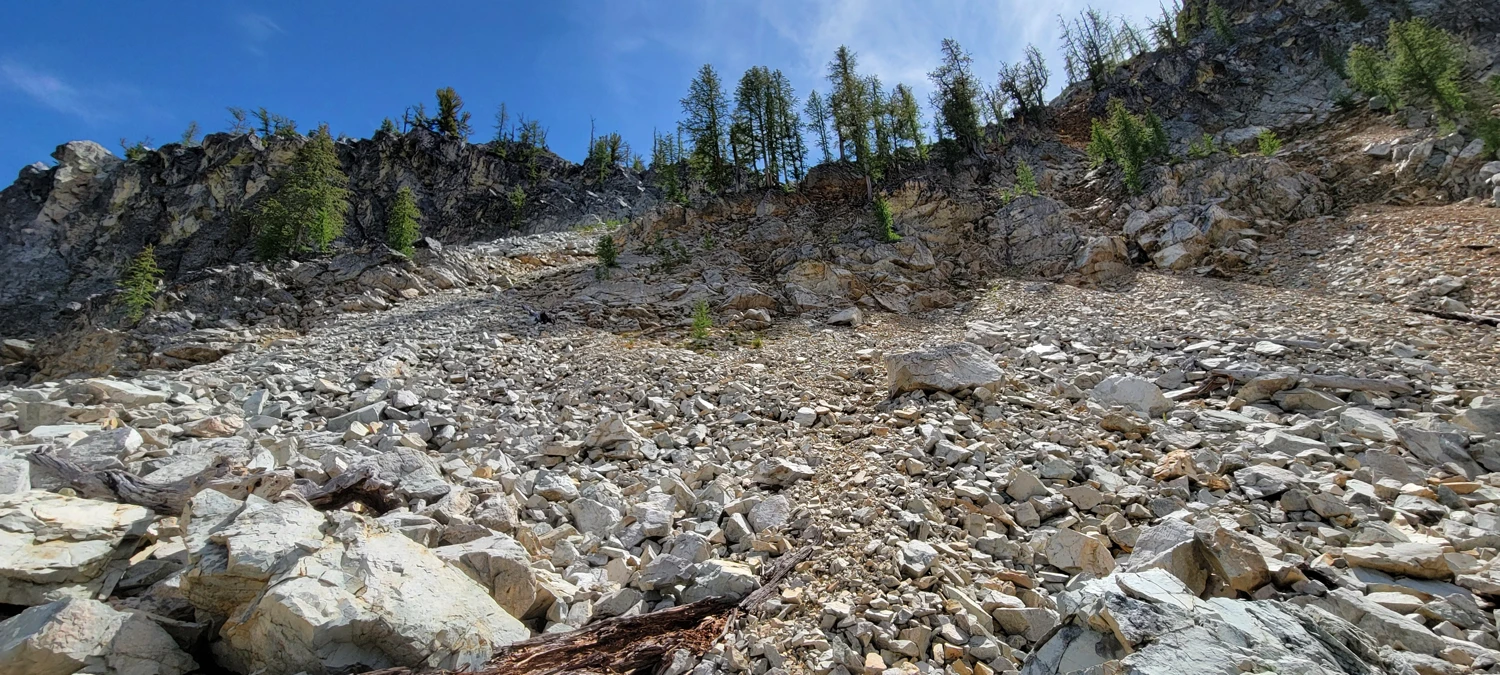
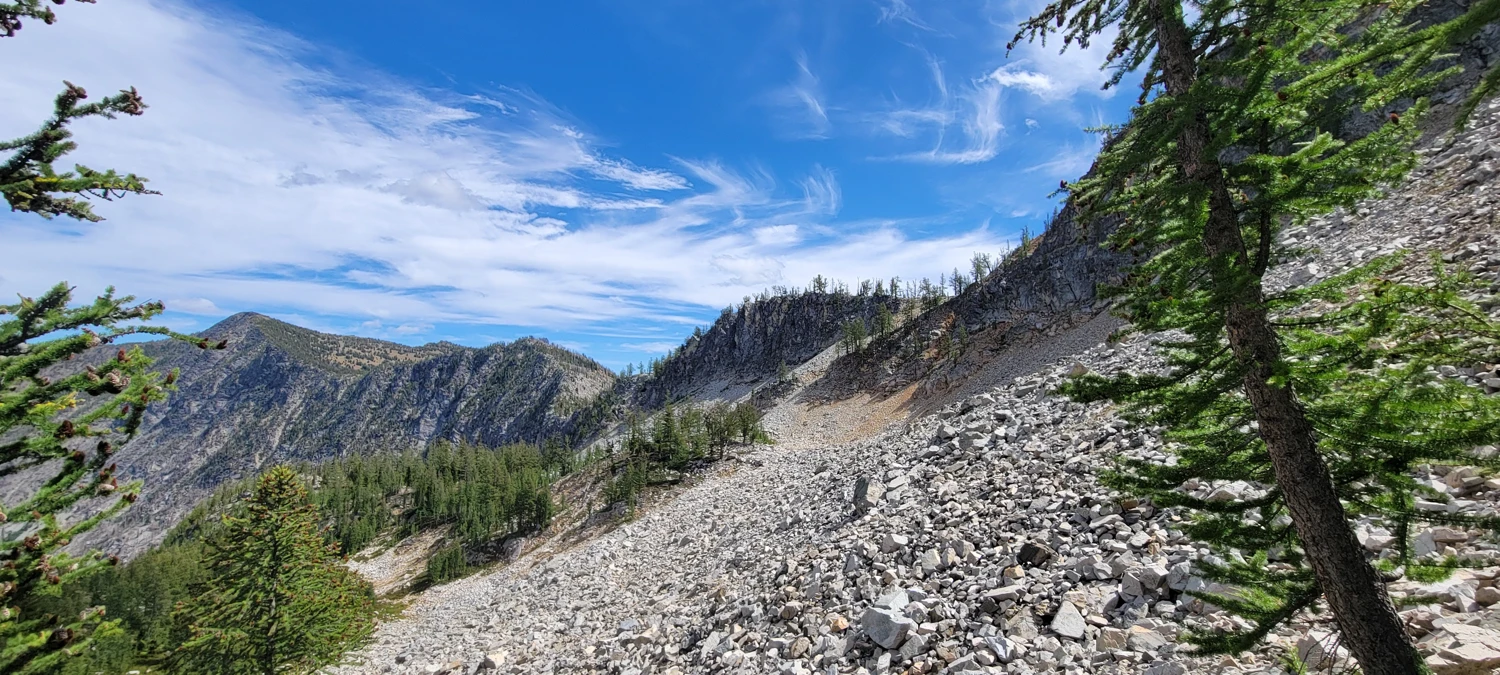
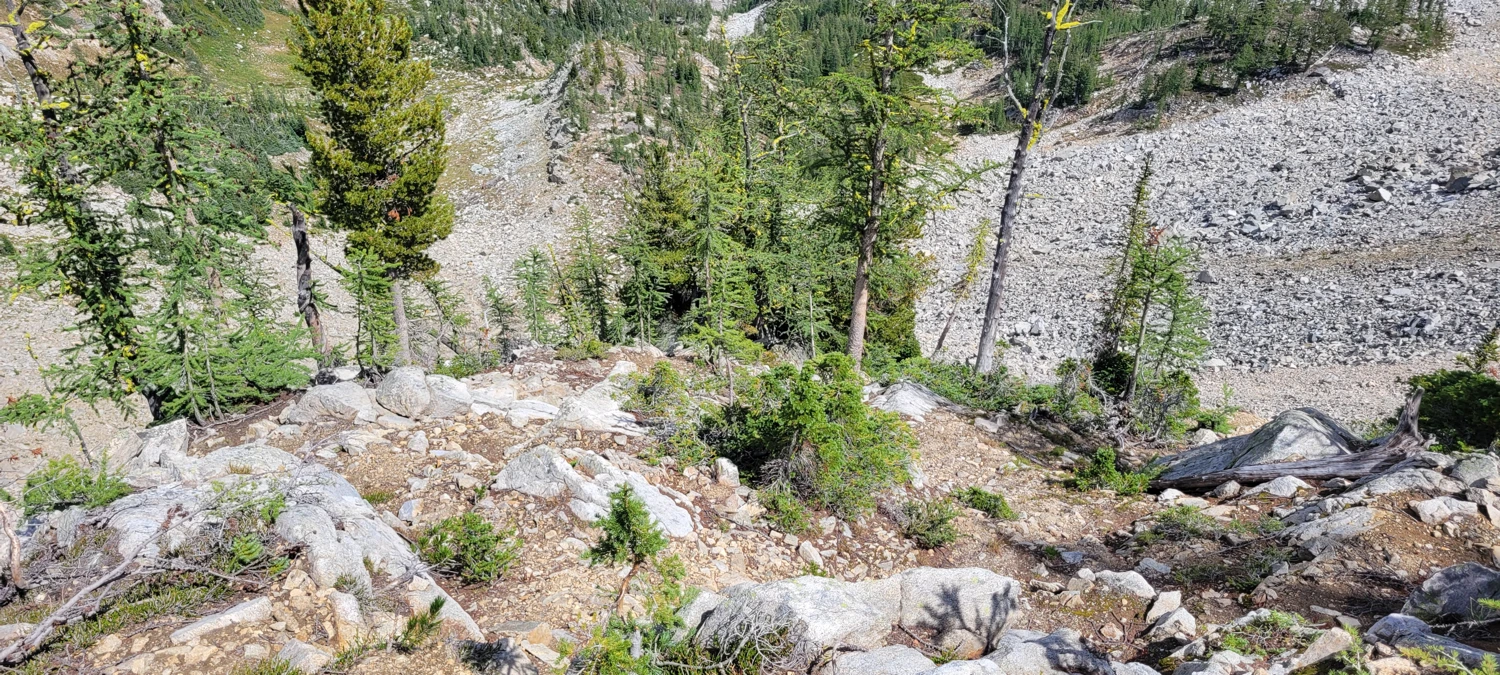
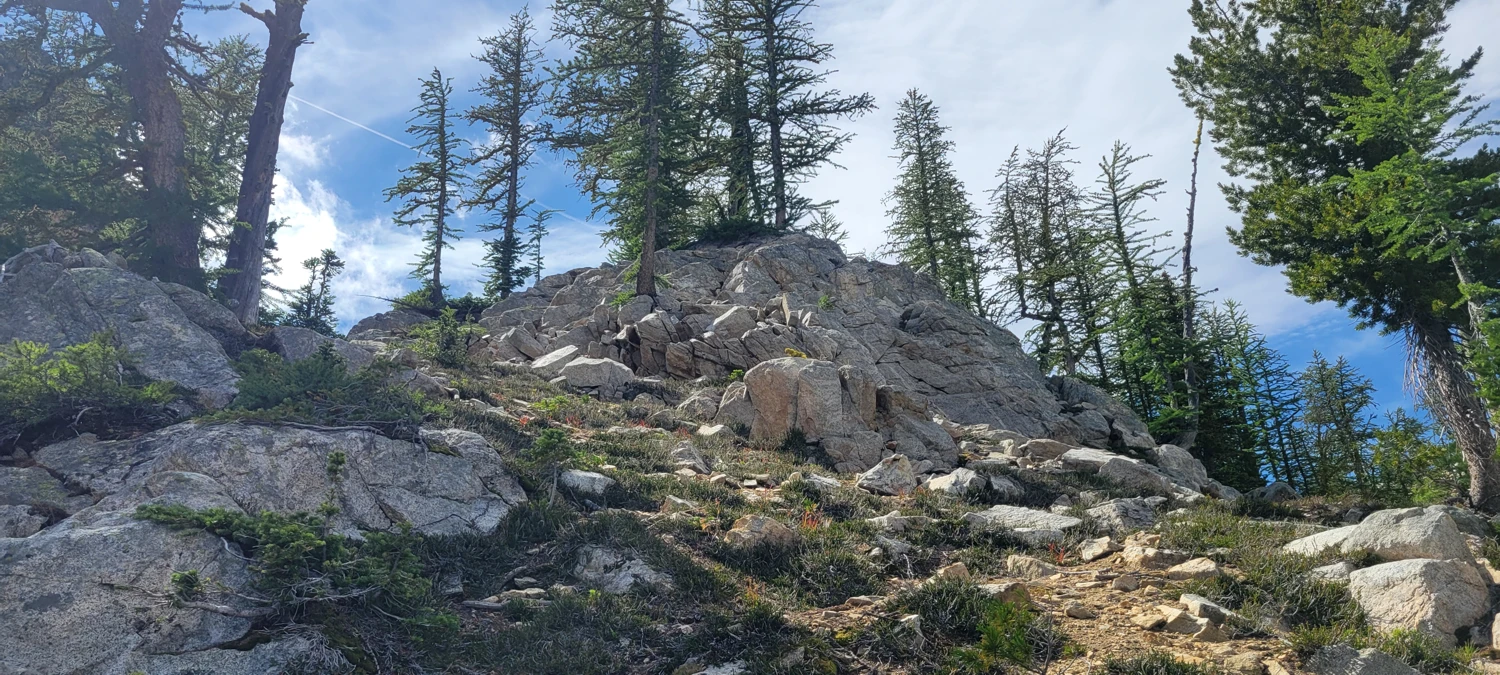
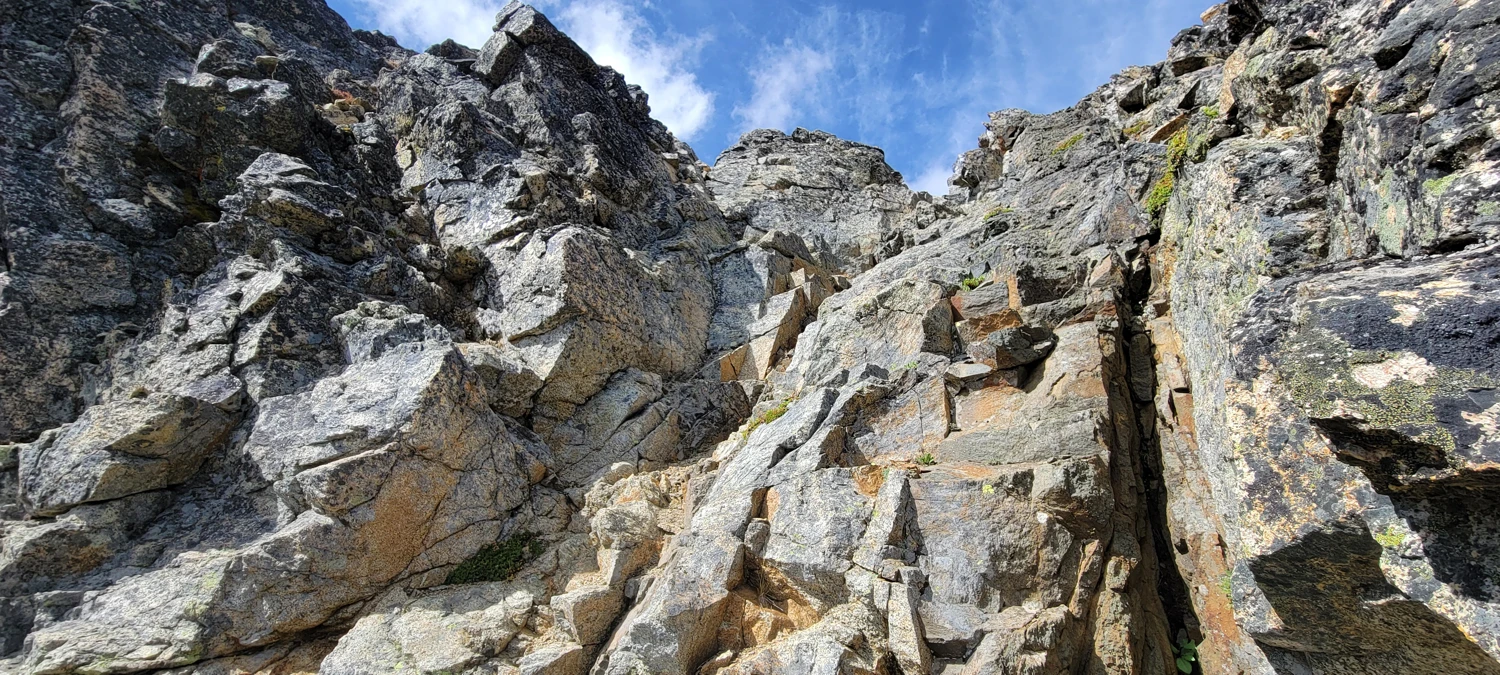
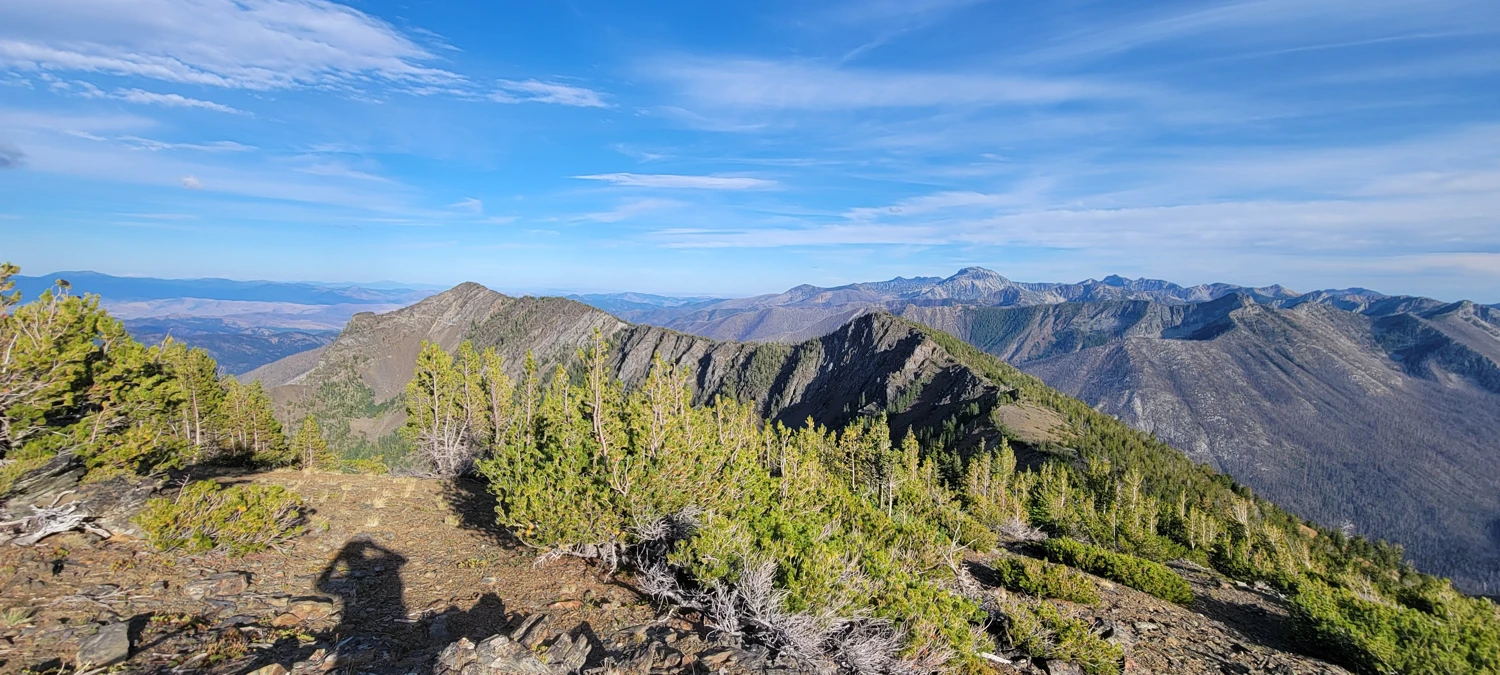
From the small pass, Reynolds Peak sits off to climber’s right. To reach it, you first scramble up the ridge. This section has a decent amount of exposure in places and lands somewhere around class 2 to 3 depending on exactly how you pick your way through it. Nothing felt wildly difficult, but it was steep enough to keep me paying attention. Once on top of that ridge, the upper mountain is mostly just a scree walk and a short summit scramble.
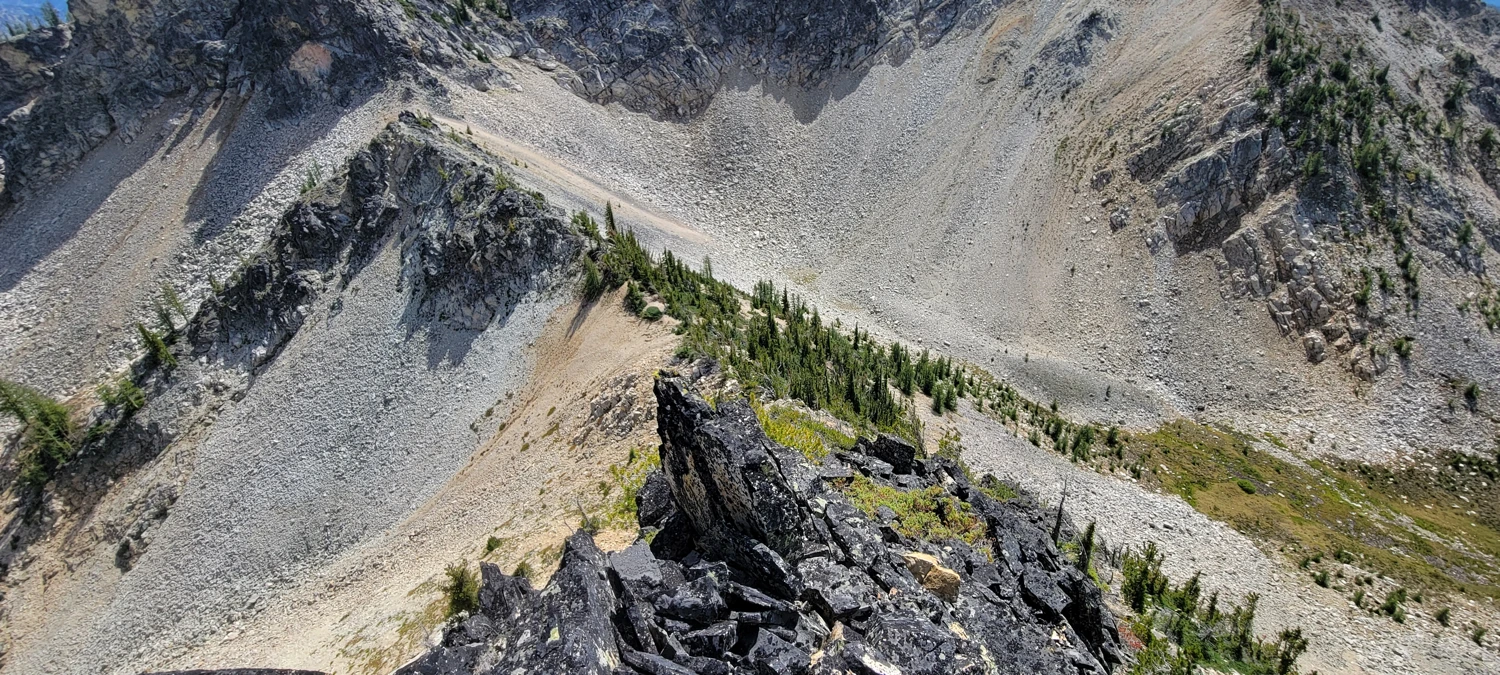
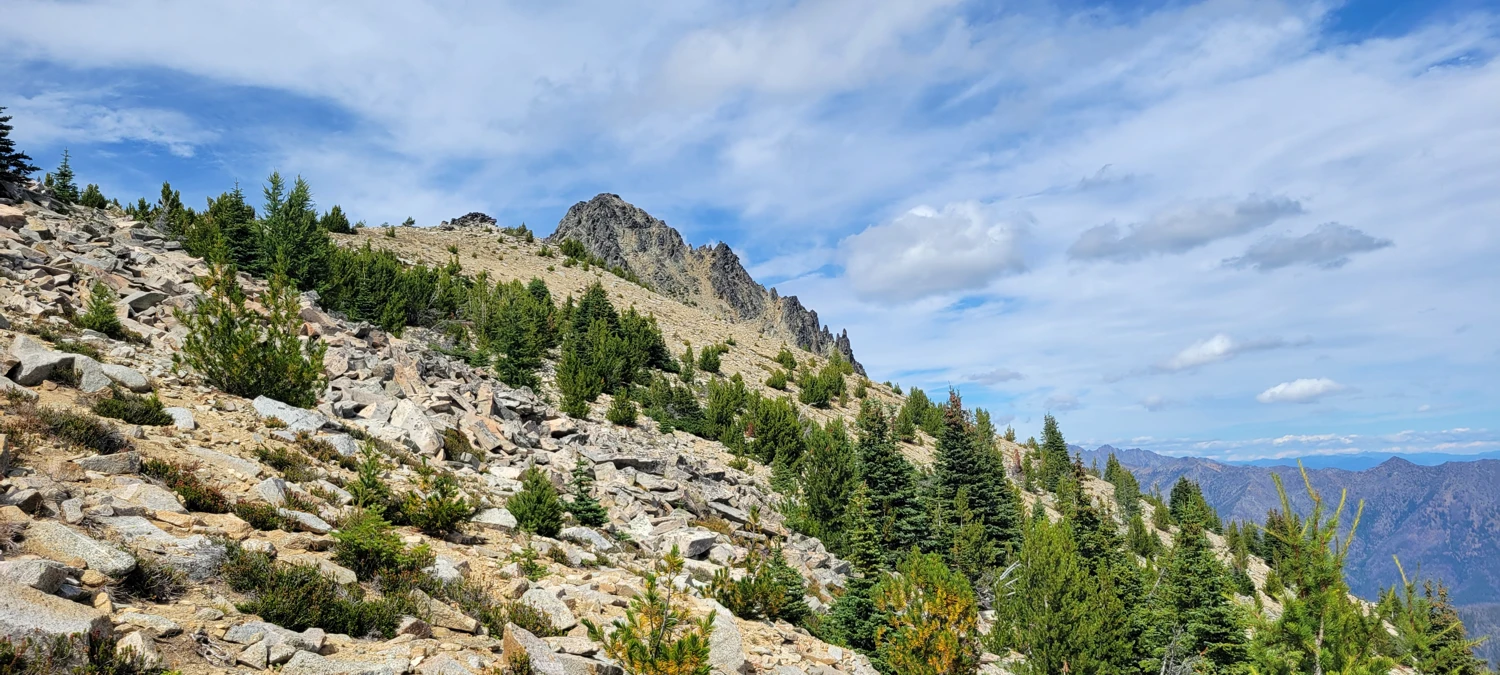
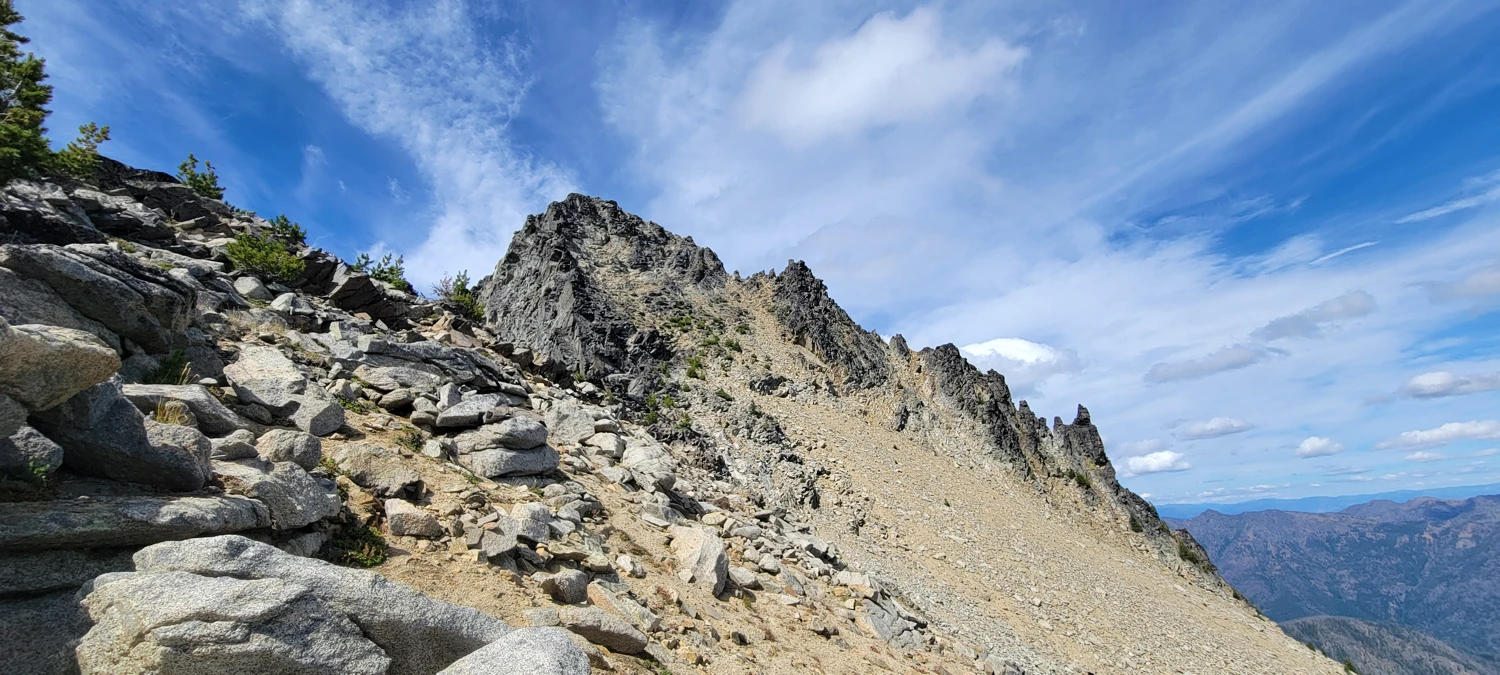
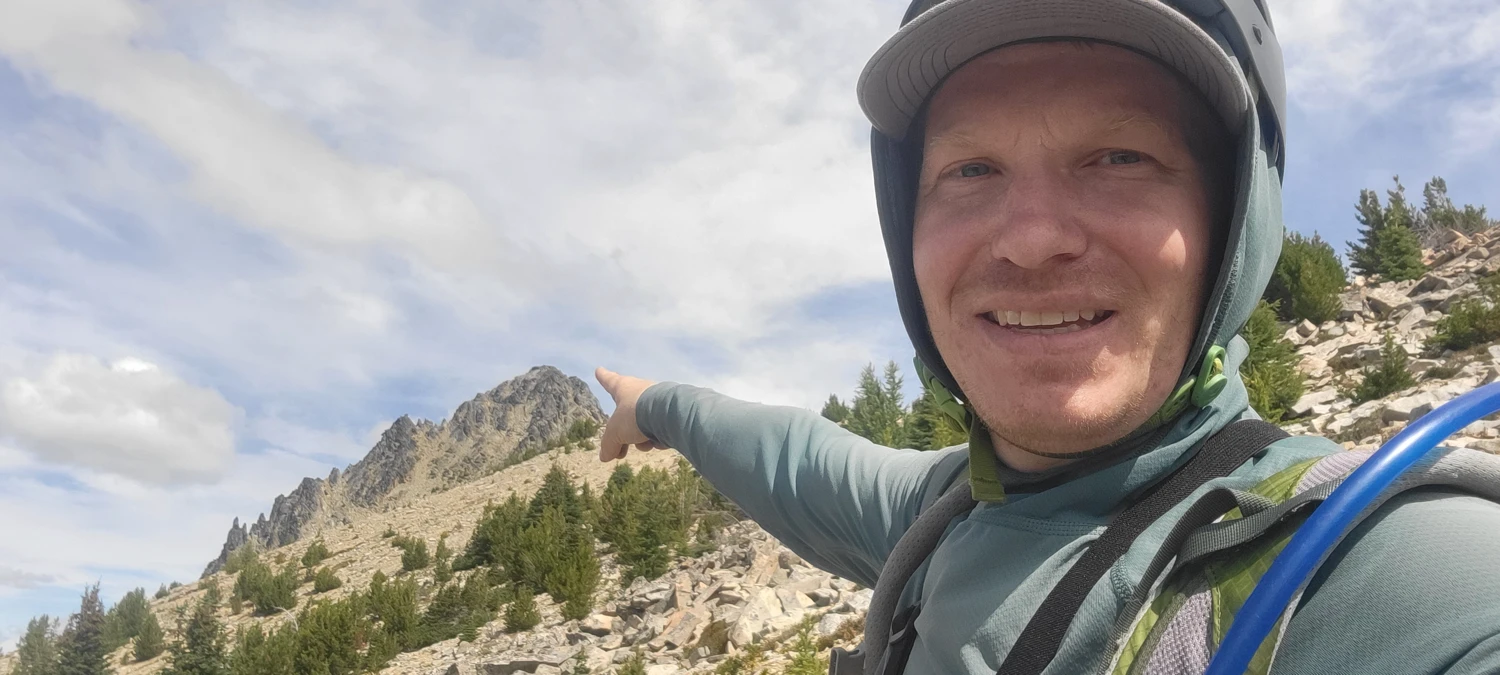
The day before on Big Snagtooth, I had smashed my knee on a rock. Then while crossing the face on Reynolds Peak, a rock slipped out from under my foot and I smashed the exact same spot again. That felt so absurd it was almost funny. I ended up hunched over for a while and it took me about ten minutes before I could fully stand up again. I am not sure what nature had against my knee that week, but it was getting a little personal.
Even so, I decided to keep going. At that point I was close enough to the summit of Reynolds Peak that turning around felt more irritating than smart. So I limped upward and made the summit roughly thirty minutes later. I did not stay long. After a short break I turned around because I wanted to be back near Williams Lake before dark, and I still had plenty of ground to cover.
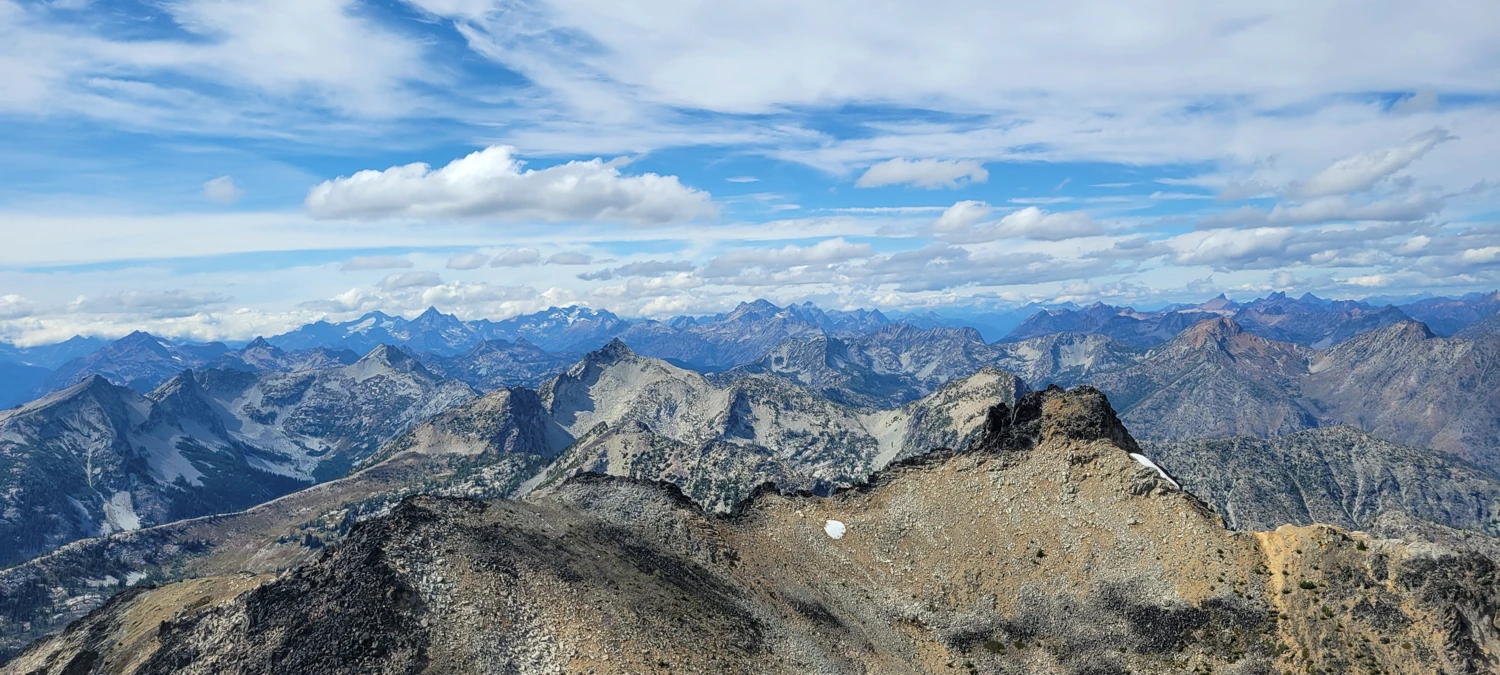
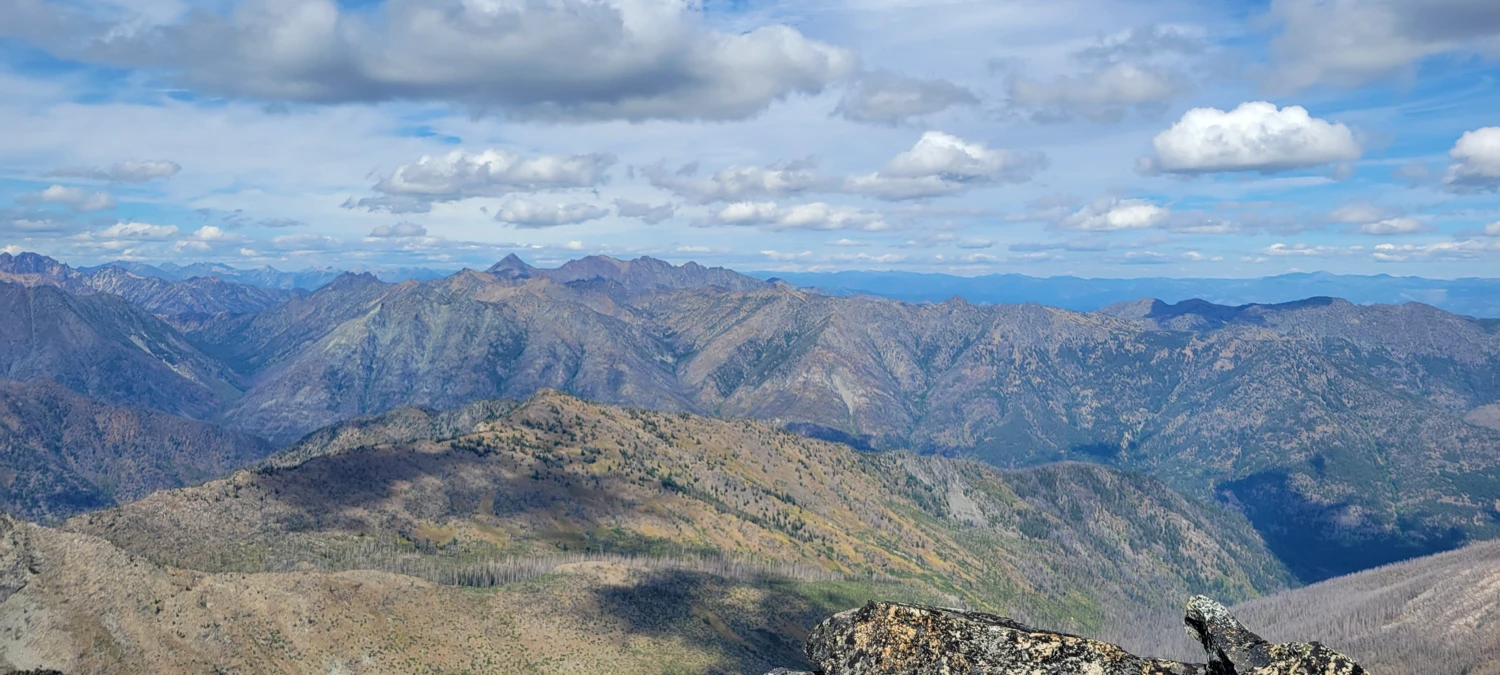
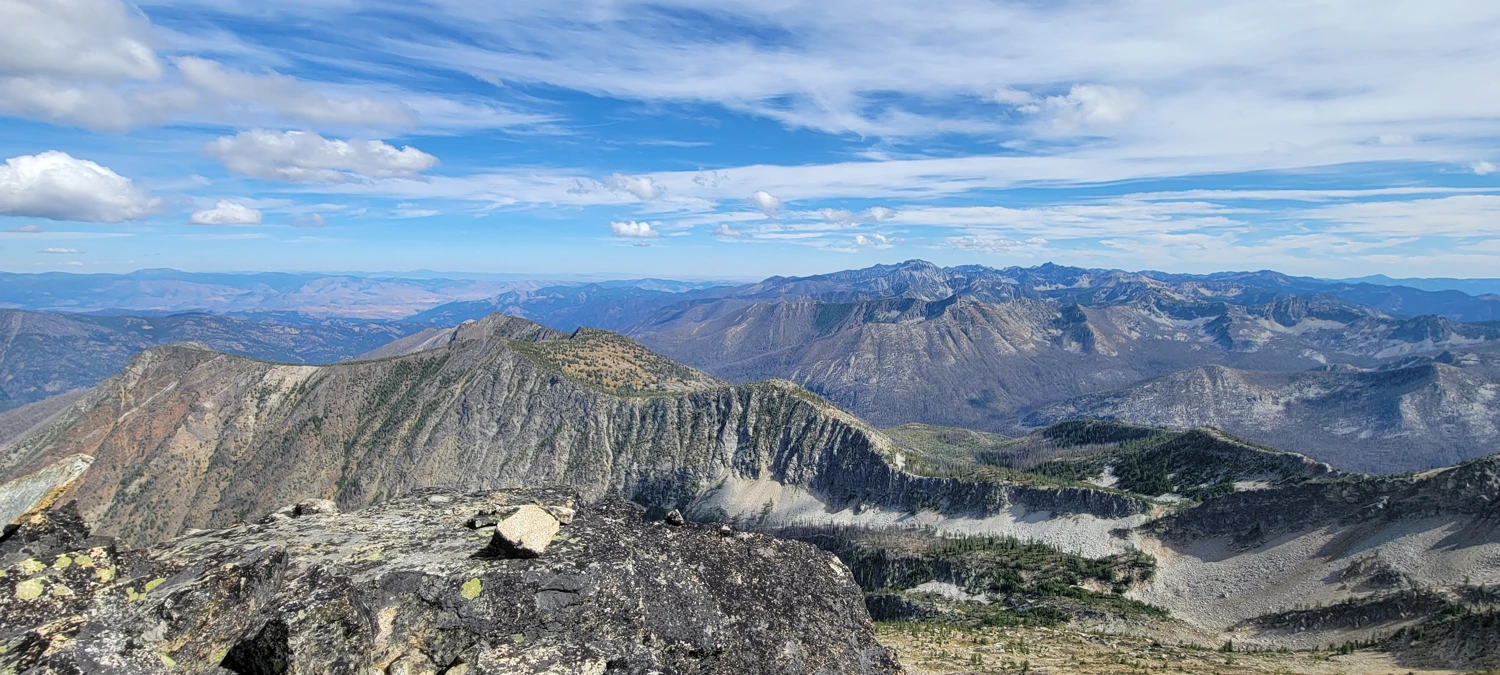
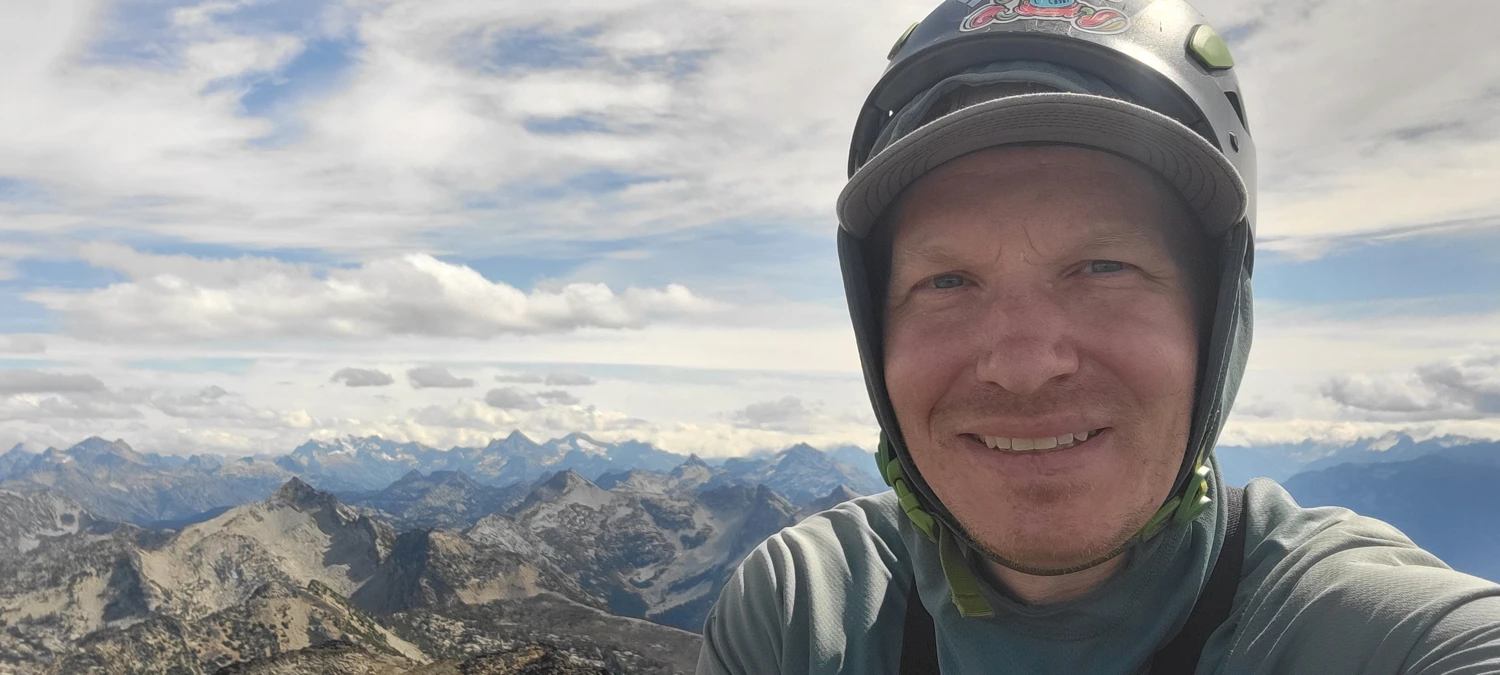
The return to the ridge above Williams Lake took about the same amount of time as it had on the way in. Since I still had some daylight left, I decided to tack on a couple extra bumps because, hey, why not.. I went over Peak 7230 and then continued up Williams Butte. By the time I reached the top of Williams Butte the light was fading, and I was finally motivated to stop making the day longer than necessary. Luckily I found the proper trail this time and got back to Williams Lake with about an hour of daylight left.
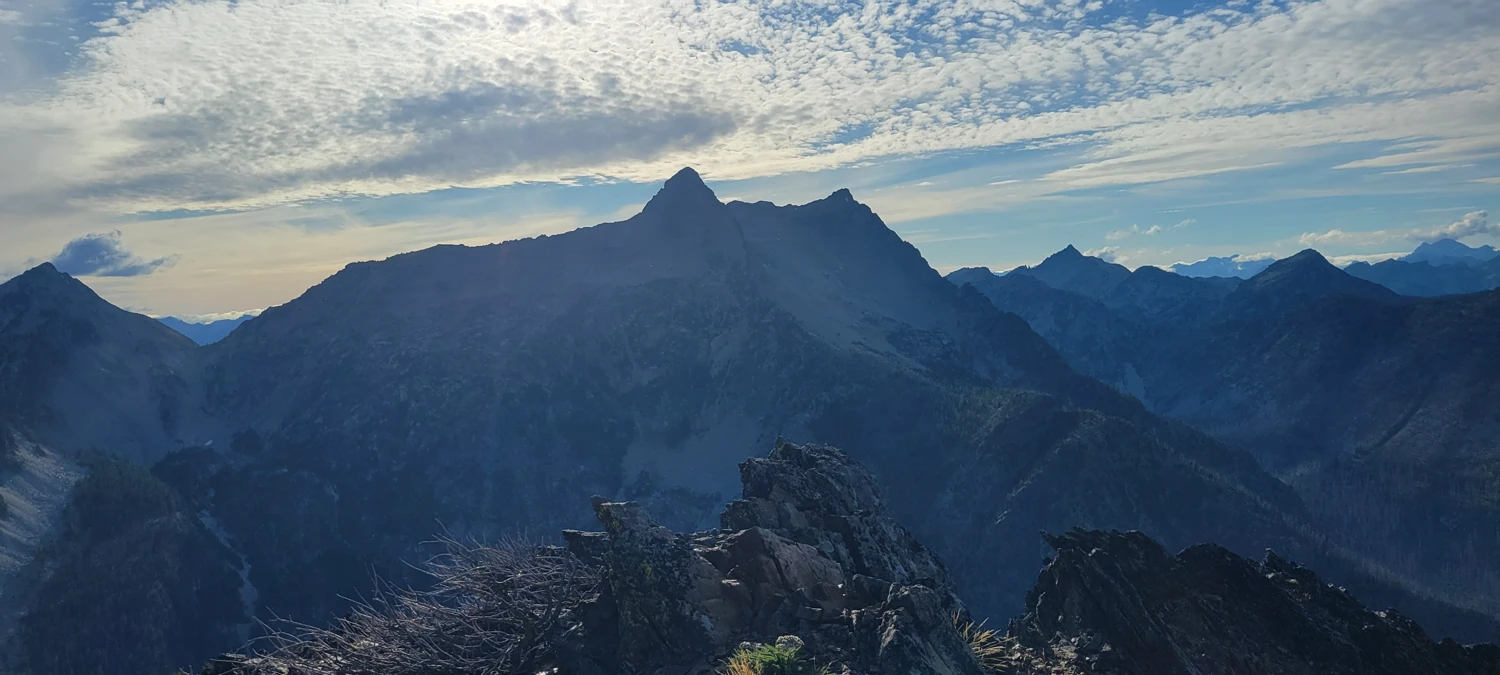
I had assumed I was alone out there all day. Later, while filling water in the creek, I suddenly heard something moving nearby and for a split second thought I might be reaching for bear spray. Then I realized someone was talking to me. We exchanged a little beta, which always feels slightly surreal after hours of seeing nobody, and then I headed for the car.
I made it back in just under thirteen hours. By then I was completely cooked from doing two big days back to back. Dinner was cold chili, followed by a beer, followed by climbing back into the front seat to sleep. Not exactly glamorous, but Reynolds Peak was a worthy finish to the trip. The route has a nice mix of straightforward trail, easy navigation problems, loose basin travel, and just enough scrambling to make it interesting. It is not the kind of peak that hands itself over for free, but it also never felt contrived. Reynolds Peak just felt like one of those long, honest days where you earn the summit.